February 05, 2026
Understanding How Penetration Testing Identifies Vulnerabilities Before Hackers Do

Athul VJ
Author
In today’s digital world, cyberattacks are increasing every day. Organizations store sensitive data such as personal information, financial records, and confidential business details online. Protecting this data from hackers has become a top priority. This is where Penetration Testing, commonly known as Pentesting, plays a crucial role.
What is Penetration Testing?
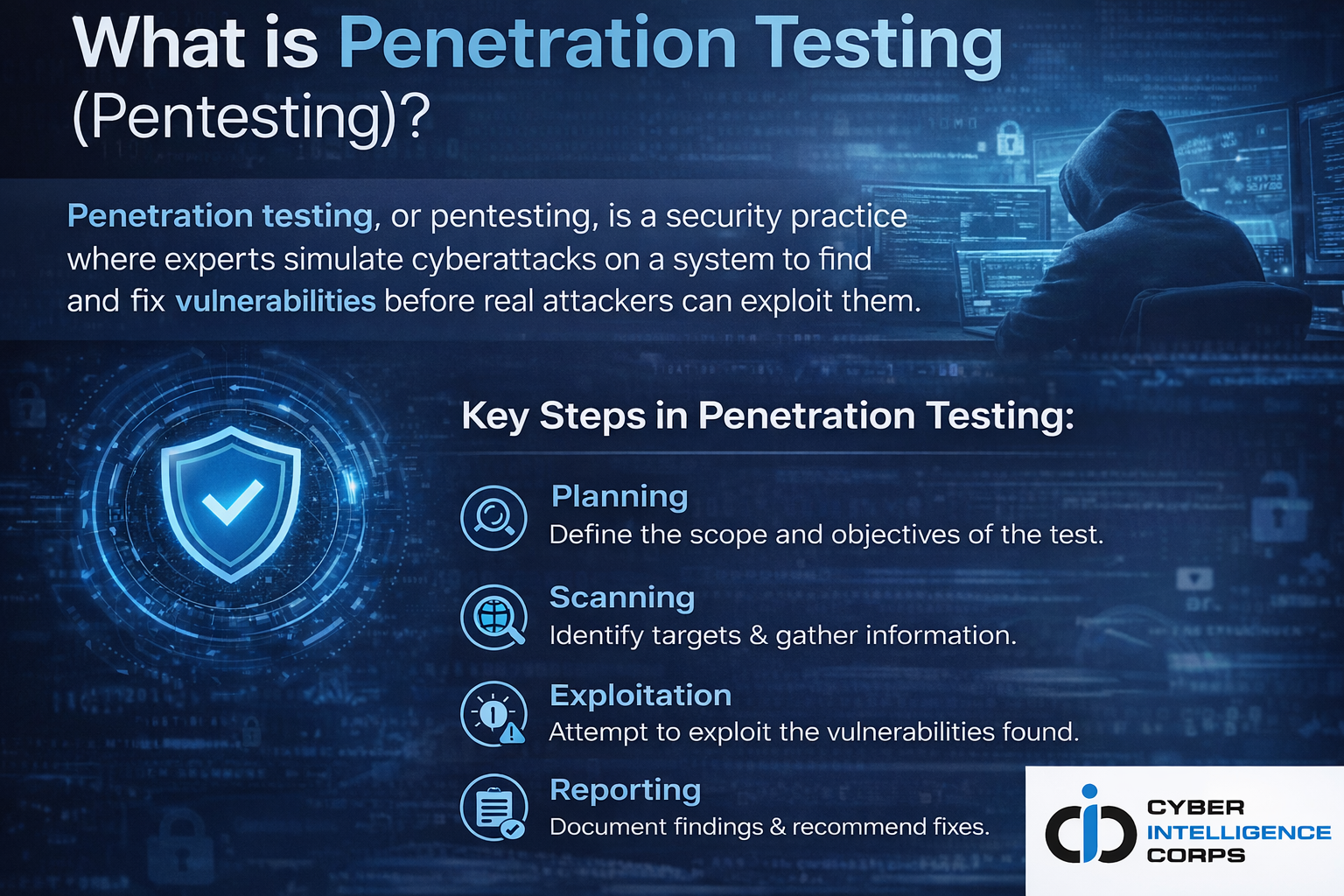
Penetration Testing is an authorized simulated cyberattack performed by security professionals to identify vulnerabilities in a system, network, or application before malicious hackers can exploit them. It is a legal and controlled process conducted with the permission of the organization.
Pentesters use the same tools and techniques as real attackers, but their goal is to find and fix security weaknesses, not to cause harm.
Why is Penetration Testing Important?
Many systems appear secure from the outside but may have hidden flaws. Firewalls, antivirus software, and security tools are not always enough. Pentesting helps organizations:
Discover security loopholes
Protect sensitive data
Prevent financial loss
Ensure customer trust
Meet compliance and security standards
Types of Penetration Testing
Network Pentesting – Identifies vulnerabilities in networks, routers, and firewalls.
Web Application Pentesting – Tests websites and web apps for flaws like SQL injection and XSS.
Mobile Application Pentesting – Checks security issues in Android and iOS apps.
Social Engineering Testing – Tests human vulnerabilities through phishing and manipulation.
Wireless Network Pentesting – Examines Wi-Fi networks for security weaknesses.
How Does Penetration Testing Work?
Pentesting follows a structured process:
Reconnaissance – Gathering information about the target.
Scanning – Identifying open ports and services.
Gaining Access – Exploiting vulnerabilities safely.
Maintaining Access – Checking how long an attacker could stay inside.
Reporting – Providing a detailed report with fixes and recommendations.
Tools Used in Penetration Testing
Some popular tools used by pentesters include:
Nmap
Metasploit
Burp Suite
Wireshark
OWASP ZAP
Kali Linux tools
Penetration Testing vs Hacking
The key difference is permission and purpose. Hackers break into systems illegally for personal gain, while pentesters are ethical professionals hired to improve security.
Conclusion
Penetration Testing is an essential part of modern cybersecurity. It helps organizations stay one step ahead of cybercriminals by identifying weaknesses before they are exploited. Regular pentesting ensures systems remain secure, data stays protected, and trust is maintained in the digital environment.
What is Penetration Testing?
Penetration Testing is an authorized simulated cyberattack performed by security professionals to identify vulnerabilities in a system, network, or application before malicious hackers can exploit them. It is a legal and controlled process conducted with the permission of the organization.
Pentesters use the same tools and techniques as real attackers, but their goal is to find and fix security weaknesses, not to cause harm.
Why is Penetration Testing Important?
Many systems appear secure from the outside but may have hidden flaws. Firewalls, antivirus software, and security tools are not always enough. Pentesting helps organizations:
Discover security loopholes
Protect sensitive data
Prevent financial loss
Ensure customer trust
Meet compliance and security standards
Types of Penetration Testing
Network Pentesting – Identifies vulnerabilities in networks, routers, and firewalls.
Web Application Pentesting – Tests websites and web apps for flaws like SQL injection and XSS.
Mobile Application Pentesting – Checks security issues in Android and iOS apps.
Social Engineering Testing – Tests human vulnerabilities through phishing and manipulation.
Wireless Network Pentesting – Examines Wi-Fi networks for security weaknesses.
How Does Penetration Testing Work?
Pentesting follows a structured process:
Reconnaissance – Gathering information about the target.
Scanning – Identifying open ports and services.
Gaining Access – Exploiting vulnerabilities safely.
Maintaining Access – Checking how long an attacker could stay inside.
Reporting – Providing a detailed report with fixes and recommendations.
Tools Used in Penetration Testing
Some popular tools used by pentesters include:
Nmap
Metasploit
Burp Suite
Wireshark
OWASP ZAP
Kali Linux tools
Penetration Testing vs Hacking
The key difference is permission and purpose. Hackers break into systems illegally for personal gain, while pentesters are ethical professionals hired to improve security.
Conclusion
Penetration Testing is an essential part of modern cybersecurity. It helps organizations stay one step ahead of cybercriminals by identifying weaknesses before they are exploited. Regular pentesting ensures systems remain secure, data stays protected, and trust is maintained in the digital environment.