February 08, 2026
How Oversharing Online Exposes Your Personal and Digital Life

Roshan Ali R
Author
Social media has become an inseparable part of daily life. From sharing achievements and travel photos to posting thoughts and routines, people willingly publish personal details online—often without realizing the risks involved.
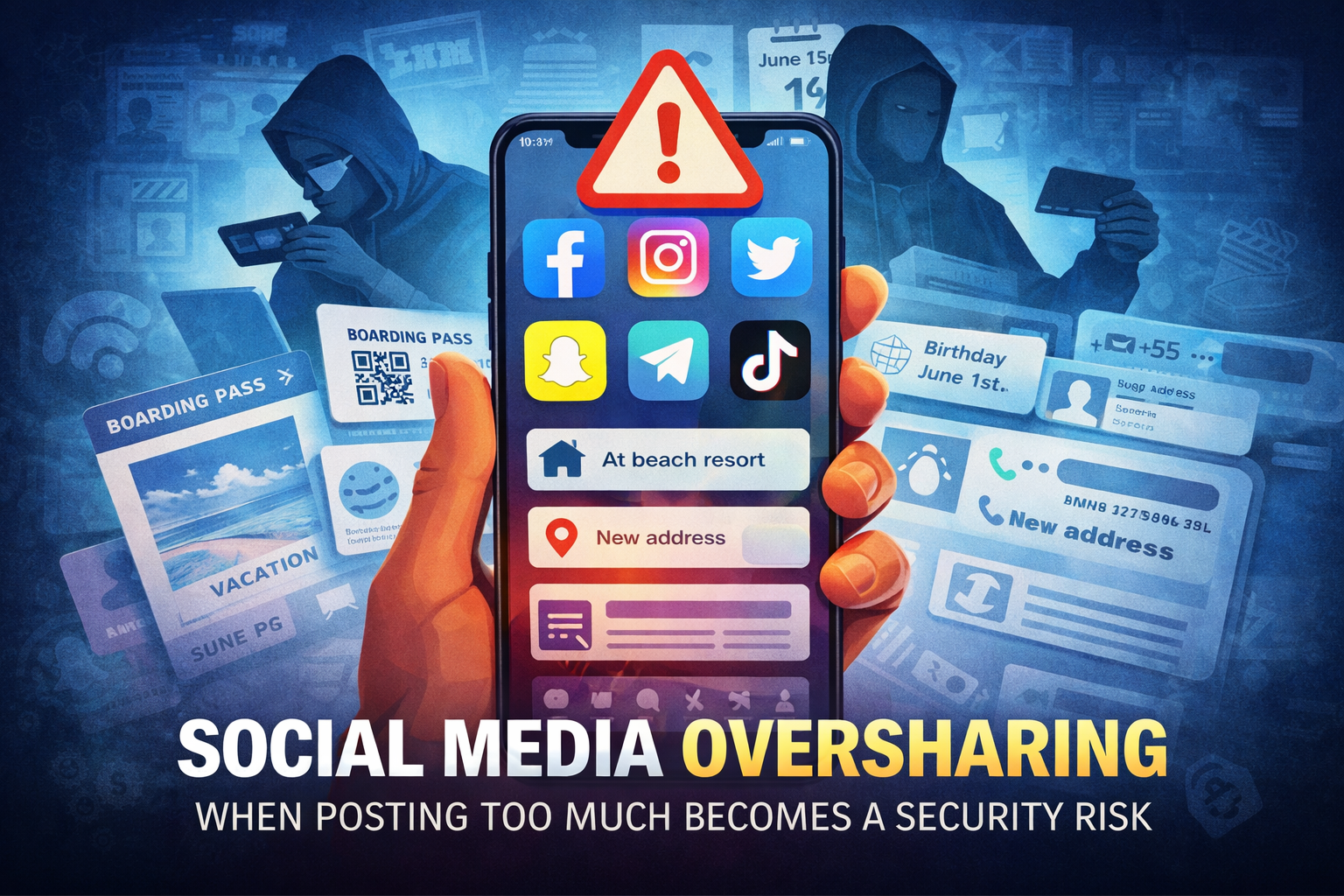
What feels like harmless sharing can quietly expose sensitive information to cybercriminals, stalkers, and scammers. Oversharing doesn’t just affect privacy—it can directly compromise personal safety and digital security.
Why Oversharing Is a Cybersecurity Problem
Every post adds to your digital footprint. Attackers collect this data over time to profile victims, guess passwords, impersonate identities, or plan targeted scams.
Information such as your location, workplace, daily routine, family details, or travel plans can be weaponized. The more you share, the easier it becomes for attackers to exploit you.
Common Examples of Dangerous Oversharing
Posting real-time location or travel updates
Sharing phone numbers or email addresses publicly
Uploading images with visible documents or IDs
Revealing personal milestones like birthdays or anniversaries
Answering public quizzes that reveal security question answers
These details are often enough to bypass security checks or craft convincing phishing attacks.
How Cybercriminals Exploit Social Media Data
Identity Theft
Attackers gather enough information to impersonate victims or open fake accounts.
Account Takeovers
Personal details are used to guess passwords or reset account access.
Targeted Scams
Scammers create highly personalized messages that victims trust.
Physical Security Risks
Public travel posts can indicate an empty home, increasing burglary risk.
Warning Signs You’re Sharing Too Much
Public profiles with no privacy restrictions
Frequent location tagging
Accepting friend requests from unknown people
Posting emotional or impulsive updates
Sharing screenshots without hiding sensitive data
Awareness is the first step toward safer online behavior.
How to Reduce Oversharing on Social Media
Review and tighten privacy settings
Avoid posting real-time locations
Limit personal information on profiles
Think before posting emotional or sensitive content
Remove old posts that reveal too much
Posting less does not reduce your social presence—it strengthens your safety.
Extra Tips for Safe Social Media Use
Use different usernames across platforms
Enable two-factor authentication
Avoid public Wi-Fi while using social apps
Never click unknown links in DMs
Regularly audit followers and friends
These small actions can significantly reduce online risks.
Final Thoughts
Social media itself isn’t dangerous—uncontrolled sharing is. Every post tells a story about you, and the wrong audience can turn that story into an attack vector.
Being mindful of what you share protects not just your privacy, but your identity, finances, and personal safety.
Remember:
Not everything in your life needs to be posted online.
What feels like harmless sharing can quietly expose sensitive information to cybercriminals, stalkers, and scammers. Oversharing doesn’t just affect privacy—it can directly compromise personal safety and digital security.
Why Oversharing Is a Cybersecurity Problem
Every post adds to your digital footprint. Attackers collect this data over time to profile victims, guess passwords, impersonate identities, or plan targeted scams.
Information such as your location, workplace, daily routine, family details, or travel plans can be weaponized. The more you share, the easier it becomes for attackers to exploit you.
Common Examples of Dangerous Oversharing
Posting real-time location or travel updates
Sharing phone numbers or email addresses publicly
Uploading images with visible documents or IDs
Revealing personal milestones like birthdays or anniversaries
Answering public quizzes that reveal security question answers
These details are often enough to bypass security checks or craft convincing phishing attacks.
How Cybercriminals Exploit Social Media Data
Identity Theft
Attackers gather enough information to impersonate victims or open fake accounts.
Account Takeovers
Personal details are used to guess passwords or reset account access.
Targeted Scams
Scammers create highly personalized messages that victims trust.
Physical Security Risks
Public travel posts can indicate an empty home, increasing burglary risk.
Warning Signs You’re Sharing Too Much
Public profiles with no privacy restrictions
Frequent location tagging
Accepting friend requests from unknown people
Posting emotional or impulsive updates
Sharing screenshots without hiding sensitive data
Awareness is the first step toward safer online behavior.
How to Reduce Oversharing on Social Media
Review and tighten privacy settings
Avoid posting real-time locations
Limit personal information on profiles
Think before posting emotional or sensitive content
Remove old posts that reveal too much
Posting less does not reduce your social presence—it strengthens your safety.
Extra Tips for Safe Social Media Use
Use different usernames across platforms
Enable two-factor authentication
Avoid public Wi-Fi while using social apps
Never click unknown links in DMs
Regularly audit followers and friends
These small actions can significantly reduce online risks.
Final Thoughts
Social media itself isn’t dangerous—uncontrolled sharing is. Every post tells a story about you, and the wrong audience can turn that story into an attack vector.
Being mindful of what you share protects not just your privacy, but your identity, finances, and personal safety.
Remember:
Not everything in your life needs to be posted online.