January 21, 2026
Beyond Accounting and Inventory

Admin
Author
For decades, ERP (Enterprise Resource Planning) systems were primarily associated with accounting, inventory, and basic operations management. While these remain core functions, modern ERP systems have evolved into powerful growth engines, driving strategy, innovation, and revenue expansion for businesses of all sizes.
From Operational Tool to Strategic Growth Platform
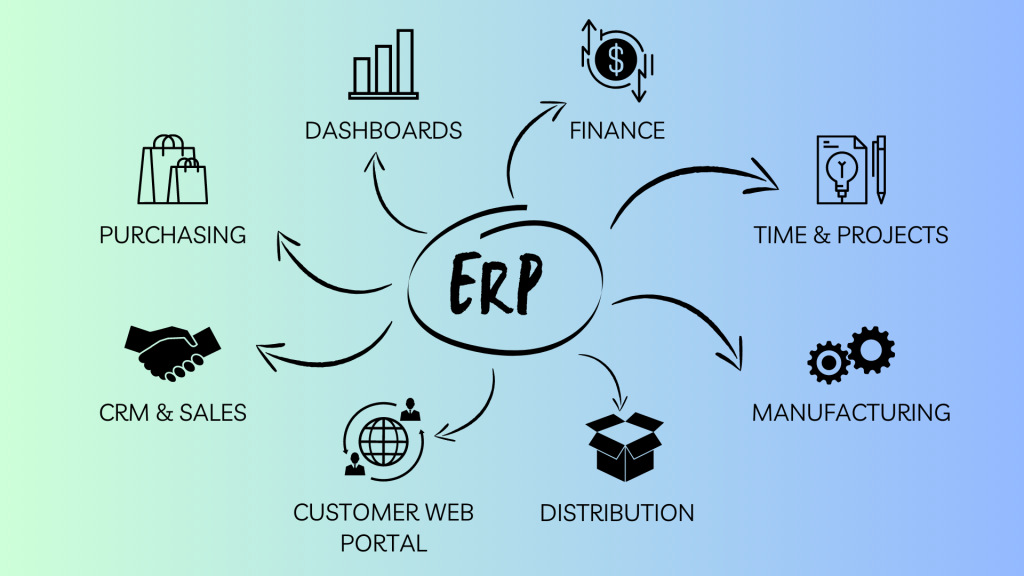
Traditional ERP focused on automating repetitive tasks—tracking stock, managing invoices, or generating reports. Today, intelligent ERP solutions integrate CRM, analytics, supply chain management, HR, and AI-driven insights to support business expansion and strategic decision-making.
Key Growth Features of Modern ERP:
Real-time analytics for informed decisions
Integrated CRM and sales automation
Supply chain optimization and demand forecasting
AI-driven insights for cost reduction and revenue growth
Scalable infrastructure for expanding operations
How ERP Drives Business Growth
1. Strategic Decision-Making with Data Insights
Modern ERP provides real-time dashboards and predictive analytics, allowing businesses to identify trends, evaluate performance, and make proactive decisions.
Example: A mid-sized retail company can use ERP insights to determine which product lines generate the highest ROI and adjust inventory or marketing strategies accordingly.
2. Streamlined Sales and Customer Management
Integrating CRM within ERP helps businesses track customer interactions, manage leads, and personalize marketing campaigns.
Example: A B2B manufacturing firm uses ERP to analyze client purchase patterns, enabling proactive upselling and cross-selling strategies that directly increase revenue.
3. Optimized Supply Chain and Operations
ERP automates supply chain processes, reducing inefficiencies, delays, and costs.
Example: An e-commerce company uses intelligent ERP to forecast demand during peak seasons, optimize warehouse operations, and prevent stockouts, resulting in higher sales and customer satisfaction.
4. Financial Control and Growth Planning
ERP provides accurate financial data, automates reporting, and detects anomalies, giving leadership a clear picture for growth planning.
Example: A startup leverages ERP to monitor cash flow across multiple projects, identify underperforming segments, and allocate resources to high-potential areas.
5. Scalability for Business Expansion
Modern ERP is designed to scale as businesses grow. Adding new departments, locations, or modules is seamless, ensuring that growth isn’t hindered by outdated systems.
Real-World Example: ERP as a Growth Partner
NetSuite ERP: Helps companies manage operations, automate workflows, and gain insights that fuel expansion strategies.
Microsoft Dynamics 365: Integrates finance, supply chain, and CRM, enabling data-driven growth decisions for enterprises.
Odoo ERP: For SMEs, it combines sales, inventory, and project management, empowering small businesses to scale efficiently.
Benefits of ERP as a Growth Engine
Drives revenue growth through strategic insights
Enhances customer engagement and satisfaction
Reduces operational costs and inefficiencies
Supports scalable business expansion
Provides a competitive edge in the market
From Operational Tool to Strategic Growth Platform
Traditional ERP focused on automating repetitive tasks—tracking stock, managing invoices, or generating reports. Today, intelligent ERP solutions integrate CRM, analytics, supply chain management, HR, and AI-driven insights to support business expansion and strategic decision-making.
Key Growth Features of Modern ERP:
Real-time analytics for informed decisions
Integrated CRM and sales automation
Supply chain optimization and demand forecasting
AI-driven insights for cost reduction and revenue growth
Scalable infrastructure for expanding operations
How ERP Drives Business Growth
1. Strategic Decision-Making with Data Insights
Modern ERP provides real-time dashboards and predictive analytics, allowing businesses to identify trends, evaluate performance, and make proactive decisions.
Example: A mid-sized retail company can use ERP insights to determine which product lines generate the highest ROI and adjust inventory or marketing strategies accordingly.
2. Streamlined Sales and Customer Management
Integrating CRM within ERP helps businesses track customer interactions, manage leads, and personalize marketing campaigns.
Example: A B2B manufacturing firm uses ERP to analyze client purchase patterns, enabling proactive upselling and cross-selling strategies that directly increase revenue.
3. Optimized Supply Chain and Operations
ERP automates supply chain processes, reducing inefficiencies, delays, and costs.
Example: An e-commerce company uses intelligent ERP to forecast demand during peak seasons, optimize warehouse operations, and prevent stockouts, resulting in higher sales and customer satisfaction.
4. Financial Control and Growth Planning
ERP provides accurate financial data, automates reporting, and detects anomalies, giving leadership a clear picture for growth planning.
Example: A startup leverages ERP to monitor cash flow across multiple projects, identify underperforming segments, and allocate resources to high-potential areas.
5. Scalability for Business Expansion
Modern ERP is designed to scale as businesses grow. Adding new departments, locations, or modules is seamless, ensuring that growth isn’t hindered by outdated systems.
Real-World Example: ERP as a Growth Partner
NetSuite ERP: Helps companies manage operations, automate workflows, and gain insights that fuel expansion strategies.
Microsoft Dynamics 365: Integrates finance, supply chain, and CRM, enabling data-driven growth decisions for enterprises.
Odoo ERP: For SMEs, it combines sales, inventory, and project management, empowering small businesses to scale efficiently.
Benefits of ERP as a Growth Engine
Drives revenue growth through strategic insights
Enhances customer engagement and satisfaction
Reduces operational costs and inefficiencies
Supports scalable business expansion
Provides a competitive edge in the market